As electric vehicles (EVs) become increasingly popular, understanding charging technology is crucial. One prominent method is DC fast charging. How does DC fast charging work? This technology enables quick and efficient charging, appealing to EV users who need to minimize downtime.
DC fast charging uses direct current to provide high power levels. Unlike standard AC chargers, which are slower, DC fast chargers deliver energy directly to the battery. This process can significantly reduce charging time, making it ideal for long trips. Users can charge their vehicles up to 80% in about 30 minutes, depending on the vehicle's capabilities and charger specifications.
However, there are challenges. Not all EVs support DC fast charging. Some vehicles may experience reduced battery life with frequent use of fast charging. This raises questions about the long-term impact on battery health. Users must balance convenience against potential drawbacks. Understanding these dynamics is essential for informed decision-making in the rapidly evolving EV landscape.
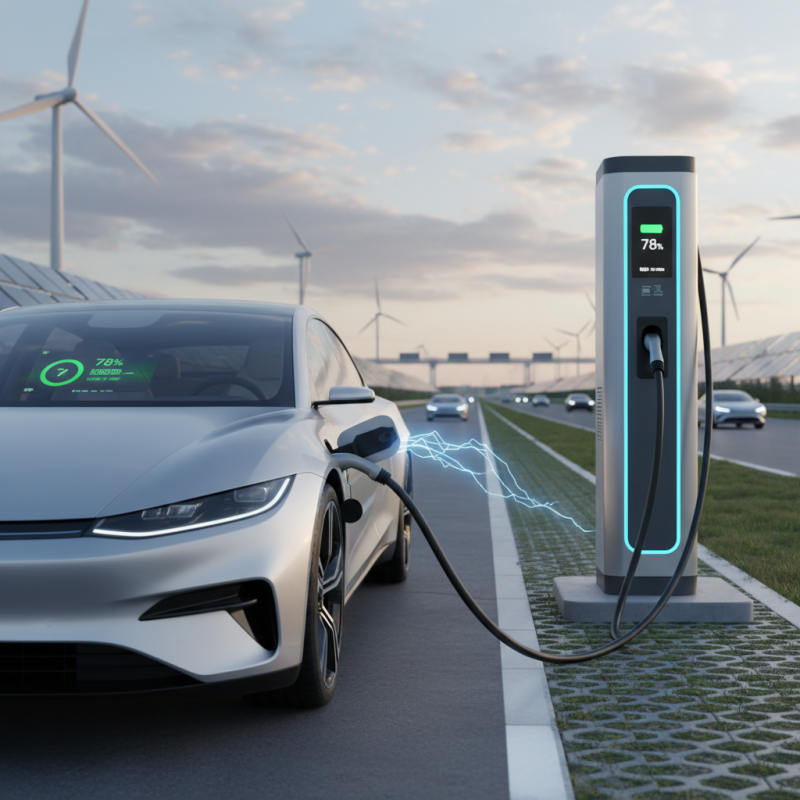
Understanding DC Fast Charging: An Overview
DC fast charging is a game-changer for electric vehicles (EVs). This technology can deliver high voltage and current, enabling rapid battery replenishment. With a standard DC fast charger, drivers can achieve 80% battery capacity in just about 30 minutes. This speed makes long-distance travel more feasible for EV owners.
Understanding the components of DC fast charging reveals its complexity. The process involves converting AC electricity to DC, which is essential for EV batteries. Fast chargers usually provide between 50 kW to 350 kW of power. However, not all vehicles can handle maximum speeds. Battery management systems play a vital role in ensuring safe charging. They must adapt to the needs of different battery types and capacities.
Despite these advantages, there are challenges to consider. Not every charging station is equipped with DC fast chargers. Infrastructure varies by region, and availability can be inconsistent. Additionally, high charging speeds can lead to battery degradation over time. Careful usage and monitoring are crucial for maintaining battery health. Users should reflect on their charging habits to optimize both convenience and battery longevity.
The Technology Behind DC Fast Charging for EVs
DC fast charging technology is a game-changer for electric vehicles (EVs). Unlike traditional AC charging, which can take several hours, DC fast charging significantly reduces charging time. This method employs high-voltage direct current, allowing EVs to charge up to 80% in just 30 minutes. According to the U.S. Department of Energy, DC fast chargers can deliver power at rates ranging from 50 kW to 350 kW. This vast range means faster charging capabilities, promoting widespread electric vehicle adoption.
The DC fast charging system uses specialized charging stations that communicate with the vehicle’s battery management system. This ensures that the power delivered is optimized for the battery's specific needs. The International Energy Agency reported that in 2021, global sales of electric cars reached 6.6 million, with fast charging infrastructure playing a crucial role in this growth. Yet, there are challenges. Not all EVs can handle high power levels, and compatibility issues persist in the market. Many chargers still require standard connectors, making universal access a concern for consumers.
Safety and efficiency standards are continuously evolving within the industry. The rapid growth of DC fast charging networks raises questions about grid dependency and energy sourcing. While it provides convenience, users must be aware of potential strain on local grids during peak times. Addressing these challenges requires collaboration among manufacturers, utility providers, and policymakers. The future of DC fast charging hinges on refining this technology while increasing accessibility and sustainability for all EV users.
How DC Fast Charging Stations Operate
DC fast charging (DCFC) stations play a crucial role in enhancing the electric vehicle (EV) charging experience. These stations use direct current to quickly charge EV batteries, significantly reducing downtime. Unlike traditional chargers, which use alternating current, DCFC offers higher voltage, enabling faster energy transfer. This efficiency can recharge a battery to 80% in just about 30 minutes, making them ideal for long-distance travel.
Operators of DC fast charging stations focus on robust connectivity. A reliable network improves user experience. It's also essential for station management to monitor performance. Regular maintenance is necessary to ensure operational efficiency. Not all stations are created equal, and some may require improvements in their infrastructure.
Tips for users include checking the charging speed before arriving. Station availability can vary, so planning ahead is beneficial. Be aware of peak hours when charging stations might be busier. Charging etiquette is vital—always move your vehicle once charging is complete. This helps others access the station without delay.
How Does DC Fast Charging Work for Electric Vehicles? - How DC Fast Charging Stations Operate
| Parameter |
Description |
| Charging Power |
Typically ranges from 50 kW to 350 kW, allowing rapid charging. |
| Charging Time |
Can charge an EV to 80% in 20 to 30 minutes, depending on the vehicle and station power. |
| Connector Types |
Common connectors include CCS (Combined Charging System), CHAdeMO, and Tesla Supercharger. |
| Voltage Level |
DC fast chargers typically operate at voltage levels of 400V to 800V. |
| Cooling Systems |
DC fast chargers often include liquid cooling systems to prevent overheating during high power delivery. |
| Location |
Usually located along highways, in parking lots, and urban areas to facilitate convenient charging. |
Benefits of Using DC Fast Charging for Electric Vehicles
DC fast charging is revolutionizing the way electric vehicles (EVs) are used. One of the significant benefits of this technology is its charging speed. Unlike traditional charging methods, DC fast chargers can deliver up to 350 kW of power. This allows vehicles to gain an 80% charge in as little as 20-30 minutes. This speed is vital for long-distance travel, reducing range anxiety for EV drivers.
Another advantage of DC fast charging is its accessibility. As EV adoption continues to climb, the demand for charging infrastructure increases. According to a recent report by the International Energy Agency, there were over 1.8 million public charging points globally by 2021, with a significant portion being fast chargers. Fast-charging stations can often be found in strategic locations, such as highway rest areas and urban centers, thus enhancing driver convenience.
However, there are challenges to consider. The installation of DC fast charging stations requires significant investment and can face regulatory hurdles. Additionally, not all EVs are compatible with every charger, leading to potential confusion for users. As the market grows, ongoing improvements are needed to address these issues effectively. As the technology progresses, the importance of reliable and efficient fast-charging solutions will undoubtedly become more pronounced.
DC Fast Charging Benefits for Electric Vehicles
Challenges and Limitations of DC Fast Charging Systems
DC fast charging systems present multiple challenges and limitations, making them a complex solution for electric vehicle (EV) users. One significant issue is the high cost of installation and infrastructure development. Charging stations require substantial investment, which can deter businesses and municipalities from expanding their networks. This could lead to an uneven distribution of charging points, particularly in rural areas.
Additionally, the charging speed can fluctuate due to several factors. Environmental conditions, such as temperature, affect battery performance and charging efficiency. During colder months, battery chemistry changes, resulting in slower charging times. Users may experience longer wait times, questioning the reliability of these systems.
Another challenge is the limited compatibility among EV models. Not all vehicles can utilize DC fast charging, which can frustrate users. They may find themselves unable to access fast charging stations, limiting the benefits of this technology. This situation may lead to skepticism about the widespread adoption of electric vehicles.
FAQS
: DC fast charging uses direct current to quickly charge electric vehicle batteries. It reduces downtime significantly.
They can charge a battery to 80% in about 20-30 minutes. This is much faster than traditional chargers.
They are found in strategic places, like highway rest areas and urban centers, improving driver convenience.
High installation costs and regulatory hurdles can limit their expansion. This creates uneven access in some areas.
No, not all EVs are compatible. This can cause confusion and limit the benefits for some users.
Environmental conditions like temperature can impact charging speed. Colder weather may lead to longer charging times.
Users should check charging speeds and availability beforehand. Planning helps avoid busy peak hours.
Moving your vehicle once charging is complete allows others access. This helps maintain a smooth flow for all users.
Rapid charging reduces range anxiety and enables convenient long-distance travel. This is vital for EV drivers.
Ongoing advancements are needed to ensure compatibility and enhance infrastructure. Reliability and efficiency must improve.
Conclusion
DC fast charging is a revolutionary technology designed to rapidly recharge electric vehicles (EVs). Understanding how does DC fast charging work involves recognizing that it utilizes direct current to deliver high power levels, enabling vehicles to recharge significantly faster than traditional chargers. The process begins at DC fast charging stations, where specialized equipment converts alternating current (AC) from the grid into DC power.
The benefits of using DC fast charging for electric vehicles are substantial, as it dramatically reduces charging time, making EVs more convenient for long trips and encouraging wider adoption. However, there are challenges and limitations to this technology, including the high infrastructure costs and the need for compatible EVs. Overall, while DC fast charging presents a breakthrough in EV technology, understanding its operational nuances remains essential for maximizing its advantages.

 EnerNova Charger