In the evolving world of electric vehicles (EVs), understanding charging options is crucial. One common question arises: "What is the difference between AC and DC EV chargers?" This knowledge can enhance user experience and efficiency. As of 2023, the global electric vehicle market is projected to surpass 26 million units annually. The industry is rapidly growing, making the choice of chargers significant.
AC chargers, the most prevalent type, work with standard electrical outlets. They typically provide a slower charge, taking hours to fully recharge an EV. In contrast, DC chargers deliver fast charging capabilities, often replenishing batteries in under an hour. As reported by the International Energy Agency, more DC fast chargers are needed to meet increasing demand.
However, both charger types come with challenges. AC chargers are widely accessible but may not meet urgent charging needs. DC chargers offer speed but can be more expensive and less available. It's essential to acknowledge these trade-offs when choosing the right charging solution. Understanding these differences ensures better decision-making for EV owners, fitting their lifestyle and driving habits.
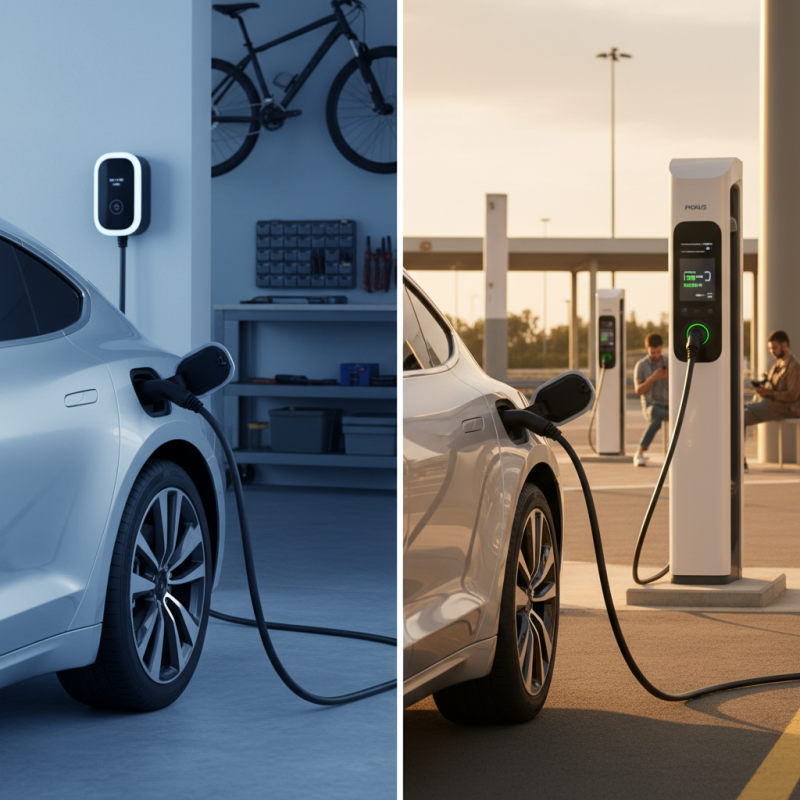
Understanding the Basics of AC and DC Charging Systems
When it comes to electric vehicle (EV) charging, understanding the differences between AC and DC systems is crucial. AC, or alternating current, chargers provide a slower charge compared to DC chargers. AC charging typically occurs at home or in public charging stations. It uses the existing power grid, making it widely available. However, charging can take several hours, which may not suit everyone’s needs.
DC, or direct current, chargers offer a much faster charging experience. They convert power on-site, delivering energy directly to the vehicle’s battery. This allows for rapid charging in a matter of minutes. Many urban areas are beginning to adopt DC fast chargers to meet the growing demand for quick EV charges. Yet, these chargers are often more expensive to install and operate.
It's important to evaluate your own charging requirements. While AC chargers are practical for overnight charging, DC chargers cater to those in a hurry. Some users might experience challenges when using public DC chargers. They might face longer wait times or compatibility issues with certain EV models. Balancing the types of chargers available helps improve the overall charging experience for EV users.
Comparison of AC and DC EV Chargers
Key Differences in Charging Speed and Efficiency
Electric vehicles (EVs) can be charged using either AC (Alternating Current) or DC (Direct Current) chargers. Each type has unique advantages. AC chargers are commonly found at home and public charging stations. They typically deliver power at a lower rate. A standard Level 2 AC charger provides about 3.7 kW to 22 kW. On the other hand, DC chargers are designed for rapid charging. They can deliver power from 50 kW to over 350 kW, allowing for much faster charging times.
Charging speed significantly affects efficiency. According to a report by the International Energy Agency, DC fast chargers can charge an EV to about 80% in 30 minutes to an hour. In contrast, AC chargers may take several hours for a full charge. This difference often influences user choice for long trips versus daily commuting. However, finding DC chargers can be challenging. The availability of reliable and efficient DC charging infrastructure is still developing.
Moreover, the cost of installation varies. AC chargers are generally less expensive to install but provide slower charging. This means users must weigh the initial costs against their charging needs. The choice isn't just about speed; it also involves convenience and accessibility. An ideal solution might combine both options, but this isn’t always practical in every location. The transition to widespread EV use requires ongoing improvements in charging technology and infrastructure.
Common Applications for AC and DC EV Chargers
Electric vehicles (EVs) rely on charging stations, which fall into two main categories:
AC (Alternating Current) and
DC (Direct Current).
AC chargers are commonly used in residential settings. They transform power from the grid into a format suitable for battery charging.
According to a report from the International Energy Agency (IEA), over 90% of public charging stations utilize AC technology.
This makes them accessible and convenient for daily charging needs.
DC chargers, on the other hand, are ideal for fast charging.
They are often found in commercial locations and along highways. Research indicates that DC chargers can deliver up to
80% battery capacity in just 30 minutes.
This rapid charging is crucial for long-distance travel, serving the needs of drivers with busy schedules.
However, the high cost of installation and limited availability in certain regions remain challenges.
Each type of charger plays a role in shaping the future of electric mobility. However, not every location has the infrastructure to support
DC charging. In contrast, AC chargers are prevalent but may take longer to charge.
This balance is critical as the adoption of electric vehicles increases. The choice between AC and DC may depend on individual needs,
location, and charging time preferences. As EV adoption grows, addressing these differences becomes essential.
The Role of Charger Connectors and Compatibility
When charging electric vehicles (EVs), understanding charger connectors is key. Different connectors exist for AC and DC chargers. AC chargers generally use Type 1 or Type 2 connectors. In contrast, DC chargers often employ CCS or CHAdeMO connectors. These variations affect charging speed and compatibility.
Compatibility can be tricky. Not all EVs support every type of connector. This can lead to frustrating experiences at charging stations. For example, if you arrive at a station with an incompatible charger, you’re left waiting or searching for another option. It's crucial to know your vehicle's specifications and the available connectors in your area.
The disparity between AC and DC charging isn’t just about technology. It also impacts users daily. Some may find themselves needing an adapter, which isn’t always available. This raises concerns about accessibility and convenience. The choice of charger is significant and should not be taken lightly. Understanding these differences can help make better decisions in the long run.
Factors to Consider When Choosing a Charger Type
When choosing between AC and DC electric vehicle (EV) chargers, several factors should be taken into account. The charging speed is one of the key reasons to differentiate them. DC chargers offer faster charging times, ideal for long trips. In contrast, AC chargers are slower but often more accessible, especially at home or in residential areas. You might find one at a public parking lot, but you may wait longer.
Another important aspect is the compatibility with your vehicle. Not all EVs support both charger types. Check your vehicle's specifications carefully. Some cars can only charge with AC, while others can use both. This can limit your options surprisingly. You need to think about where you’ll charge often. Do you usually charge at home, or do you rely on public stations?
Cost is another factor to think about. DC chargers tend to be more expensive to install and maintain. This cost can influence where you decide to charge. It’s worth noting that incentives for using particular charger types vary too. Research them thoroughly. You may discover that your choice affects your long-term charging expenses.
How to Differentiate Between AC and DC EV Chargers? - Factors to Consider When Choosing a Charger Type
| Feature |
AC Chargers |
DC Chargers |
| Charging Speed |
Slow to Moderate (3.6 - 22 kW) |
Fast (50 kW and above) |
| Use Case |
Home Charging, Overnight Charging |
Highway Charging, Quick Stops |
| Installation Cost |
Lower Installation Costs |
Higher Installation Costs |
| Availability |
Widely Available |
Less Common, but Increasing |
| Efficiency |
Less Efficient |
More Efficient |
| Compatible EVs |
Most EVs |
Typically Faster Models |
FAQS
: The two main types are AC (Alternating Current) and DC (Direct Current) chargers.
AC chargers are commonly found in residential settings and public charging stations. They transform grid power for charging.
DC chargers offer fast charging, providing up to 80% battery in about 30 minutes. They are ideal for long-distance travel.
AC chargers generally use Type 1 or Type 2 connectors for charging electric vehicles.
Not all EVs support every type of connector. Incompatibility can leave drivers searching for alternatives.
DC chargers are faster, while AC chargers take longer to charge vehicles.
Consider charging speed, vehicle compatibility, and your usual charging locations. These affect convenience and efficiency.
Yes, DC chargers are more expensive to install and maintain, which can affect your charging decisions.
Using an adapter can help, but they are not always available, which can create accessibility concerns.
No, the choice is significant and must consider personal needs and local infrastructure. It requires careful thought.
Conclusion
When exploring "What is the difference between AC and DC EV chargers," it's essential to understand the fundamentals of charging systems. AC (Alternating Current) chargers convert electricity to a direct current within the vehicle, while DC (Direct Current) chargers provide power directly to the vehicle's battery, resulting in faster charging speeds. This key distinction impacts the efficiency and time taken to charge electric vehicles, with DC chargers typically offering more rapid replenishment than AC chargers.
Furthermore, common applications for these chargers vary. AC chargers are often used in residential settings and workplaces, while DC chargers are more suited for commercial stations and quick charging hubs. Compatibility is also a crucial aspect, as charger connectors must align with vehicle requirements. Ultimately, when choosing a charger type, factors such as charging speed, efficiency, and application scenarios play a significant role in determining the best fit for individual needs.

 EnerNova Charger