Choosing the right home battery begins with your household’s actual energy pattern. The keyword “How to select battery capacity for home storage” is not answered by one fixed number. A 10 kWh battery may support essential loads overnight, yet struggle with electric heating, pool pumps, or repeated cloudy days. A smaller system may work better when space, budget, and backup priorities are limited.
The International Energy Agency reported that global battery storage additions in the power sector increased by about 130% in 2023. Its Renewables 2024 report also highlights strong growth in distributed solar and storage. These trends show momentum, not a reason to oversize every household system. The U.S. Department of Energy’s Energy Storage Grand Challenge Roadmap stresses performance, safety, lifecycle value, and responsible deployment. Those factors matter beside simple kilowatt-hour calculations. NREL energy-storage researcher Paul Denholm offers a useful principle: “The value of storage depends on how it is used.” That sentence should guide every capacity decision.
This guide presents seven practical tips. They cover daily consumption, critical loads, solar production, backup duration, battery usable capacity, degradation, and future demand. Start with twelve months of utility bills, not a guess from a neighbor’s installation. Separate daytime usage from evening usage. Mark the refrigerator, router, medical equipment, lights, and water pump on a paper checklist. Then test the estimate against winter conditions and outage scenarios. My first calculation may still be wrong. Weather changes, batteries age, and household habits shift. A reliable design therefore includes measured data, installer verification, warranty review, and room for careful adjustment.
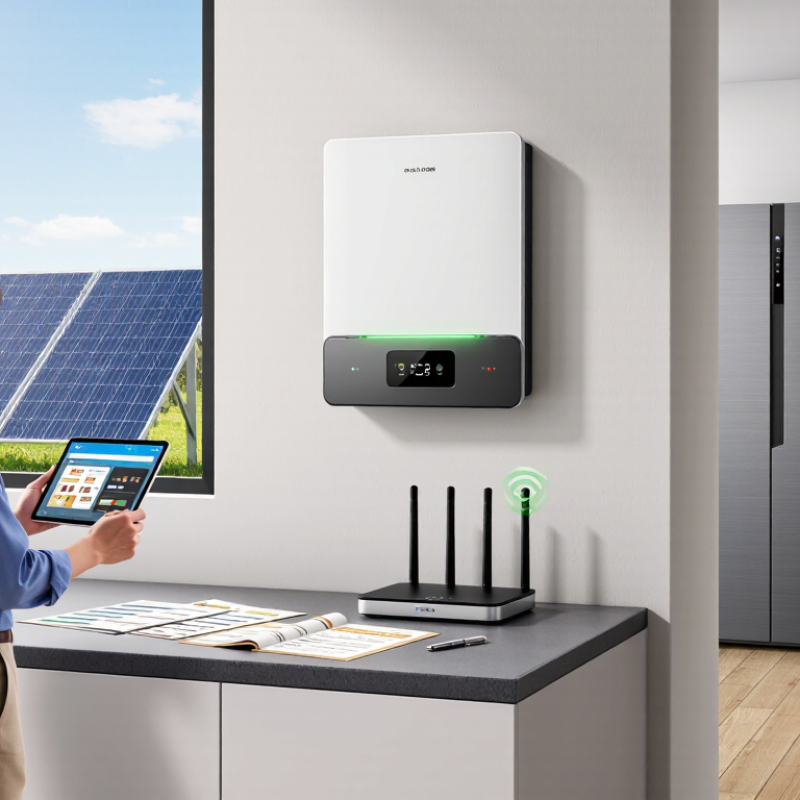
7 Tips How to Choose Battery Capacity for Home Storage?
Your storage goal should guide every capacity decision. Begin by listing essential loads, such as refrigeration, medical equipment, lighting, internet access, and a water pump. Do not size the battery for every appliance unless whole-home backup is truly necessary. Measure each device’s wattage and daily operating hours. A qualified installer can compare these figures with your energy bills and local weather patterns. Tip 1: Separate essential loads from convenient loads. Tip 2: Decide whether backup should last four hours, overnight, or several days. Tip 3: Consider cloudy weather if solar charging is part of the plan.
Backup expectations often reveal the correct battery size. A refrigerator may use modest energy but start with a brief power surge. Pumps and heating systems can demand much more. Leave room for conversion losses, battery aging, and colder operating conditions. Tip 4: Check both continuous power and starting power. Tip 5: Add a practical reserve instead of using the full battery every night. Tip 6: Review your household’s seasonal consumption, not only one monthly bill.
It is tempting to choose the largest battery available. That choice can increase cost without improving your real protection. I have seen plans overlook nighttime cooking, repeated outages, or future electric appliances. Those details matter. Tip 7: Revisit your capacity estimate every year. Your first calculation may be imperfect, and that is normal. Ask a certified professional to verify wiring, ventilation, protection equipment, and installation compliance before purchase.
| Tip | Energy Storage Goal | Typical Critical Loads | Estimated Average Load | Target Backup Time | Required Usable Energy | Suggested Nominal Battery Capacity | Recommended Continuous Inverter Output | Planning Guidance |
|---|---|---|---|---|---|---|---|---|
| 1Start with essential loads | Keep basic household services running during a short outage. | Refrigerator, Wi-Fi router, LED lights, phone charging and security system | 0.25 kW | 8 hours | 2.0 kWh | 2.4 kWh | 1.5 kW | A practical entry-level size when comfort loads are not required. |
| 2Match capacity to overnight needs | Cover essential loads through one night without grid power. | Refrigerator, lighting, communications, alarm system, small electronics and medical equipment | 0.35 kW | 12 hours | 4.2 kWh | 5.1 kWh | 2.5 kW | Choose a larger reserve if medical devices or additional refrigeration are essential. |
| 3Include work-from-home loads | Maintain basic remote work and communication during a daytime outage. | Essential loads plus laptop, monitor, modem, router and efficient office equipment | 0.60 kW | 8 hours | 4.8 kWh | 5.8 kWh | 3.0 kW | Separate high-power office equipment from nonessential loads to prevent unnecessary battery drain. |
| 4Plan for a full-day outage | Operate essential household functions for approximately 24 hours. | Refrigerator, lights, communications, security, small kitchen appliances and occasional laundry | 0.50 kW | 24 hours | 12.0 kWh | 14.5 kWh | 3.5 kW | Use energy schedules and avoid simultaneous operation of several high-power appliances. |
| 5Account for starting surges | Ensure the system can start motor-driven appliances reliably. | Critical loads plus refrigerator compressor, sump pump or well pump | 0.70 kW average | 12 hours | 8.4 kWh | 10.1 kWh | 4.0–5.0 kW continuous; higher surge capability | Battery capacity determines runtime, while inverter surge performance determines whether motors can start. |
| 6Cover partial-home backup | Support selected comfort loads in addition to essential circuits. | Essential loads, refrigerator, lighting, office equipment, efficient fan and occasional microwave use | 1.20 kW | 12 hours | 14.4 kWh | 17.4 kWh | 5.5 kW | Use a dedicated critical-loads panel and exclude electric space heating, electric water heating and EV charging. |
| 7Size for extended resilience | Prepare for multi-day outages when solar charging or a generator is available. | Essential loads, refrigeration, communications, lighting, medical equipment and limited cooking | 0.75 kW | 48 hours | 36.0 kWh | 43.5 kWh | 5.0–7.0 kW | For multi-day backup, combine adequate battery capacity with solar recharge, demand management or another charging source. |
List essential loads, including refrigeration, lighting, internet access, medical equipment, and water pumps. Whole-home backup may be unnecessary. Choose only what truly matters.
Decide whether you need four hours, one night, or several days. Cloudy weather can reduce solar charging. Plan with some caution.
Measure each appliance’s wattage and daily operating hours. Review several months of electricity bills. Evening usage matters. Do not rely on one unusually high bill.
Depth of discharge limits regular energy use. A 15 kWh battery at 80% depth provides about 12 kWh. Efficiency losses reduce it further. The label is not the whole story.
Check continuous power and starting power. Refrigerators, pumps, and heating systems may create brief surges. A battery can have enough energy but still fail during startup.
Consider keeping about 20% reserved for outages and unexpected demand. This reserve may support lighting, refrigeration, or medical equipment. More reserve can reduce daily savings.
Not always. A large battery may remain partly unused after sunny days. Compare usable capacity with real evening demand. My first estimate ignored future appliances, and it was incomplete.
Compare total cost per usable kilowatt-hour. Include installation, permits, electrical upgrades, monitoring, maintenance, and replacement costs. Cheap upfront can become expensive later. Use realistic electricity prices.
Confirm that added modules match the inverter, controls, and protection equipment. Professional commissioning may be necessary. Compatibility is easy to underestimate.
Review it every year, especially after adding appliances or changing routines. Check seasonal usage and battery aging. Weather and tariffs can shift. The estimate will not be perfect. That is normal.
Choosing the right battery size begins with a clear understanding of your home’s energy storage goals. Decide whether you need short-term backup for essential appliances, greater energy independence, or better use of solar power. Then calculate your average daily electricity consumption and identify critical loads such as lighting, refrigeration, communication devices, and heating or cooling equipment. These figures provide a practical starting point for estimating the required storage capacity.
To learn how to select battery capacity for home storage, compare your battery needs with daily solar generation and household usage patterns. Consider when energy is produced and consumed, then account for depth of discharge, system efficiency, and an emergency reserve so the battery is not regularly drained completely. Finally, evaluate battery chemistry, future expansion possibilities, expected lifespan, installation requirements, and total cost. A well-balanced choice should meet current backup needs while remaining flexible, efficient, and affordable as household energy use changes.

 EnerNova Charger