How to Future Proof Energy Storage Systems Top 10 Tips?

Time:2026-11-07 Author:Liam
0%

Energy storage is becoming essential to factories, buildings, and renewable power projects. Yet a system that works well today may struggle as energy demand, equipment, and operating conditions change. Future readiness starts with practical questions: Can the battery handle more cycles? Will replacement parts remain available? Can the control system communicate with new equipment?

For a factory, even a short outage can interrupt production. In a solar project, weak forecasting may leave stored energy unused when it is most valuable. Small details matter. Battery chemistry, cooling, fire detection, software updates, and maintenance access all affect long-term performance. No design removes every risk. That uncertainty deserves attention.

How to future-proof energy storage systems is the focus of this guide. The ten tips explore ways to plan for changing capacity needs, support system upgrades, protect performance, and evaluate suppliers. They also highlight monitoring, cybersecurity, recycling, and lifecycle costs—not just the purchase price. A credible plan uses technical data, clear warranty terms, and advice from qualified professionals. It should also account for the site’s actual load profile, climate, and available space. No checklist can predict every market shift. Owners should compare options carefully and revisit assumptions as projects evolve. Some choices may need reconsideration. The aim is not to build a system that never changes, but one that can adapt without avoidable cost or disruption.
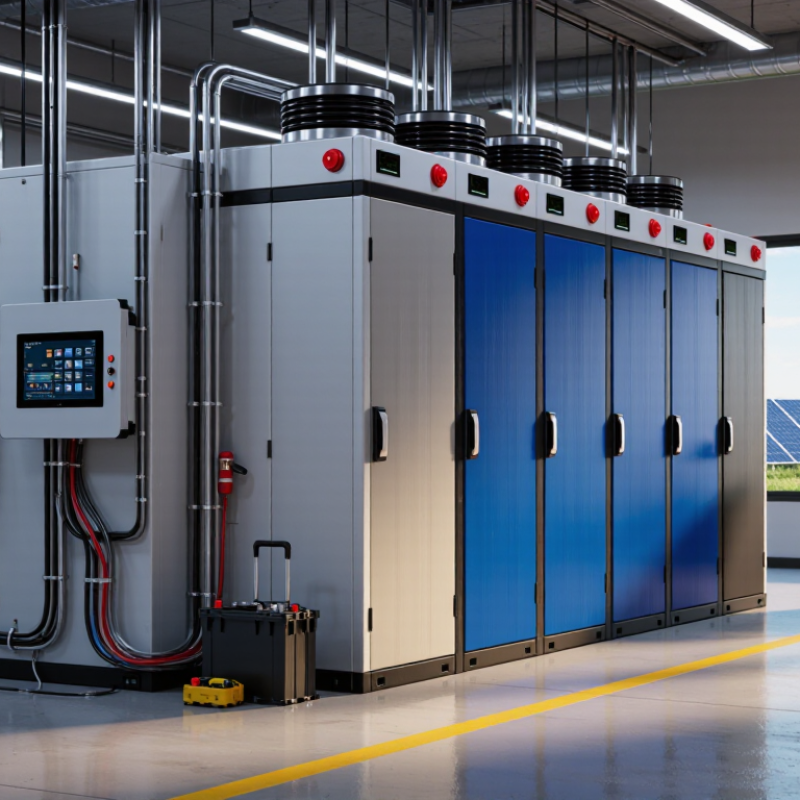
How to Future Proof Energy Storage Systems Top 10 Tips?

Forecast Grid Needs: IEA Projects 1,500 GW of Storage by 2030

The IEA’s pathway points to roughly 1,500 GW of energy storage capacity by 2030. That figure is a planning signal, not a guarantee. It also describes power capacity, measured in gigawatts, rather than how long a system can deliver energy. Grid planners need both numbers. A 100 MW battery lasting one hour serves a different need from one lasting four hours.

Forecasting starts with local evidence: hourly demand, solar and wind output, transmission limits, and seasonal peaks. A control-room chart showing a sharp evening ramp may point to a different storage design than a windy region with frequent surplus power. Plan for several scenarios, not one perfect forecast. Still, forecasts can miss.

Future-proofing also means checking practical details early. Can equipment handle repeated cycling and hot afternoons? Is there room to expand, and can the grid connection support added power? Specify performance over the system’s expected life, including degradation and maintenance access. Do not size a project from annual averages alone. Those averages can hide the difficult hours. The uncomfortable part is that no model removes uncertainty; plans need regular review as real operating data arrives.

Compare Battery Chemistries Using 85–95% Round-Trip Efficiency Benchmarks

An 85–95% round-trip efficiency benchmark is useful, but it is not a chemistry guarantee. NREL’s 2024 Annual Technology Baseline models utility-scale battery storage at 85%. The U.S. Department of Energy’s 2022 technology assessment reports approximate efficiencies of 85% for lithium-ion, 75% for sodium-sulfur, and 70% for vanadium redox flow. These figures depend on system boundaries and operating assumptions. Check whether the quoted value includes inverter losses, cooling, and other auxiliary loads.

The difference is tangible: at 85% efficiency, a 1 MWh charge returns about 850 kWh before other site loads. At 95%, it returns about 950 kWh. That gap matters. Compare systems at the AC meter, under similar temperatures, power levels, and discharge durations. Lithium-ion can fit high-efficiency, compact installations; flow batteries may suit longer-duration duty, despite lower reported efficiency. Sodium-sulfur sits between those examples in the DOE assessment. Efficiency alone can mislead: degradation, standby consumption, and cycling patterns change delivered energy over time. I would question any comparison that omits these details. Research figures are useful starting points, not a substitute for measured project data.

Design for Degradation with Capacity Headroom and Modular Replacement

A storage system should meet today’s demand and still deliver useful service as its cells age. Size capacity against the end-of-life requirement, not only the first-year load. A reserve can absorb gradual capacity loss, but excess capacity adds cost, space, and embodied materials. That trade-off deserves a clear calculation.

Use measured duty cycles, local temperatures, and expected discharge depth to estimate degradation. Then leave headroom for uncertainty rather than trusting one optimistic forecast. That matters. Track usable capacity and performance over time, so replacement decisions follow evidence instead of a calendar alone. Real operating data may challenge the original assumptions.

Modular design can make renewal less disruptive. Separate replaceable battery sections from long-lived electrical equipment where practical, and provide labeled connections, safe isolation points, lifting access, and room for technicians to work. Plan for access. A module that fits on a drawing may be difficult to remove through a narrow doorway. Also check that replacement sections can be commissioned with the existing controls and protection settings. Not every component will age at the same rate, and interfaces may become a weak point. Review the plan during maintenance, especially after unexpected heat exposure or changing site loads.

Plan Safety and Interoperability Around UL 9540 and IEC 62933

Future-proofing starts with treating safety and interoperability as design requirements, not final inspection items. UL 9540 evaluates energy storage systems and equipment as integrated systems, so review the complete configuration, including batteries, inverters, controls, and protective devices. A component certificate alone does not establish that every combination will work safely. Keep a clear record of approved configurations and any changes made during installation.

IEC 62933 provides a framework for electrical energy storage systems, including safety and performance considerations. Check which parts and editions apply to your project, then map their requirements against the system design and intended operating conditions. Ask suppliers for interface details, protection settings, communication protocols, and test documentation. Test the interfaces. A controller that cannot exchange reliable status data may hide a fault until maintenance begins. Small details matter.

Plan for updates before equipment arrives. Confirm how future battery modules, software revisions, and replacement components will be assessed against the original safety case. Keep wiring diagrams, settings, and commissioning results in a version-controlled file. During commissioning, verify alarms and shutdown responses under realistic conditions, not only on a checklist. Standards do not remove every risk, and requirements can vary by application and jurisdiction. I would not assume that a system remains compliant after an undocumented change; that assumption is easy to make and hard to defend.

Prepare for Circularity: EU Targets 80% Lithium Recovery by 2031

Future-proofing energy storage means planning for the battery’s second life—and its final dismantling. Under EU Battery Regulation 2023/1542, lithium recovery targets rise to 80% by the end of 2031. That target turns recyclability into a design requirement, not a distant sustainability promise. Specify removable modules, accessible fasteners, and clear material records. Design for disassembly. A sealed pack may be weatherproof, yet difficult to repair; that trade-off deserves honest review before procurement.

Tips: Ask suppliers for battery chemistry, pack drawings, and a documented end-of-life route. Check whether technicians can isolate and remove modules without cutting bonded materials. Keep serial-level service and repair records. Labels matter. Test take-back arrangements with the actual site operator, not just a contract clause. Small details, like a hidden fastener or missing chemistry label, can slow safe sorting.

The International Energy Agency’s Global Critical Minerals Outlook 2024 estimates that recycling could reduce the need for new mine development by 10–30% for lithium, nickel, cobalt, and copper by 2040, under its climate-aligned scenarios. Those gains depend on collection and processing capacity, not design alone. Grid batteries also age unevenly: heat, cycling patterns, and maintenance can leave modules with different remaining capacity. Plan for testing and sorting, while acknowledging that reuse is not always practical. Circularity is measurable, but never automatic.

How to Future-Proof Energy Storage Systems: Top 10 Tips — Prepare for Circularity: EU Targets 80% Lithium Recovery by 2031
# Planning Dimension Verified Data or Benchmark Future-Proofing Action
1 Plan for lithium recovery EU Battery Regulation (EU) 2023/1542 sets lithium recovery targets of 50% by the end of 2027 and 80% by the end of 2031 for recycling processes. Specify documented end-of-life routes and request evidence of recovery performance against the applicable EU targets.
2 Track other critical materials For cobalt, copper, lead and nickel, the regulation sets recovery targets of 90% by the end of 2027 and 95% by the end of 2031. Record battery chemistry and material composition so recycling partners can identify and recover relevant materials.
3 Consider recycled content From 2031, EU minimum recycled-content levels for specified battery materials include 16% cobalt, 6% lithium, 6% nickel and 85% lead, subject to the regulation’s scope and calculation rules. Include recycled-content declarations and supporting documentation in procurement requirements for batteries within scope.
4 Design for battery passports From 18 February 2027, the EU requires a battery passport for each electric-vehicle battery, light-means-of-transport battery and industrial battery with capacity above 2 kWh placed on the EU market. Prepare accessible, structured battery information, including identification, composition and lifecycle data, for applicable products.
5 Use modular, serviceable architecture There is no single EU-wide numerical benchmark for modularity; serviceability is a design and procurement choice. Document module interfaces, replacement procedures and spare-part availability to support repair and component-level replacement.
6 Make chemistry and components identifiable Battery chemistry affects material recovery routes; the EU Battery Regulation includes requirements concerning labels, marking and battery information. Maintain consistent records of chemistry, capacity, hazardous substances and component materials, and keep identification legible through service life.
7 Monitor condition throughout operation Battery performance and remaining useful life depend on operating conditions and chemistry; no universal cycle-life value applies to every storage system. Log relevant operating data, alarms and maintenance history, and define site-specific thresholds for inspection and replacement.
8 Specify safety requirements for the application IEC 62619 covers safety requirements for secondary lithium cells and batteries used in industrial applications. Applicable standards depend on system type and jurisdiction. Require documented safety testing and risk controls appropriate to the installation, including thermal management and emergency procedures.
9 Assess reuse before recycling Reuse or repurposing suitability depends on battery condition, safety, performance and applicable legal requirements; it cannot be determined from age alone. Define inspection and testing criteria for any proposed second-life use, and retain recycling as a documented end-of-life route.
10 Verify recycling and compliance records EU battery rules set distinct requirements for collection, recycling efficiency and material recovery; applicable duties vary by battery category and responsible party. Keep records of battery category, collection, treatment and recycling evidence, and review regulatory requirements for each target market.

FAQS

What does the 1,500 GW storage projection mean?

It is a planning signal for global power capacity by 2030, not a guarantee. It does not show how long storage can deliver energy.

Why do planners need both power and duration figures?

A 100 MW system lasting one hour serves a different need from one lasting four hours. Both figures shape grid planning.

What local information helps forecast storage needs?

Planners can review hourly demand, renewable output, transmission limits, and seasonal peaks. Evening demand ramps matter.

Why should projects use several forecasts?

Demand and generation can change in unexpected ways. Multiple scenarios reduce dependence on one perfect forecast. Models still miss things.

How should battery capacity account for aging?

Size the system to meet end-of-life needs, not just first-year demand. Include reasonable headroom for capacity loss and uncertainty.

What trade-offs come with extra capacity?

More reserve may help offset degradation, but it also requires extra cost, space, and materials. The balance needs careful calculation.

How can modular design make maintenance easier?

Use replaceable sections where practical. Include labeled connections, safe isolation points, lifting access, and room for technicians.

What details should teams check before replacing a module?

Confirm that replacement sections work with existing controls and protection settings. Narrow doorways can turn a simple plan into a problem.

When should performance assumptions be reviewed?

Track usable capacity and performance over time. Review plans after unusual heat exposure, changing loads, or new operating data. The original forecast may be wrong.

Conclusion

How to future-proof energy storage systems begins with planning for a rapidly expanding grid: the IEA projects that global storage capacity will reach 1,500 GW by 2030. Compare battery chemistries using round-trip efficiency benchmarks of 85–95%, while also weighing how each option performs over its full service life. Efficiency alone is not enough; systems should include capacity headroom to accommodate degradation and a modular design that allows components to be replaced or upgraded without rebuilding the entire installation.

Long-term resilience also depends on safety, compatibility, and responsible material use. Plan around applicable safety and interoperability frameworks, including UL 9540 and IEC 62933, so equipment can operate reliably within broader energy systems. Finally, consider recovery and reuse from the design stage. With the EU targeting 80% lithium recovery by 2031, circularity can help reduce material waste and support a more sustainable storage lifecycle.

Liam

Liam

Liam is a dedicated marketing professional with a profound expertise in the industry, where he excels at highlighting the unique advantages of our core products. With a keen understanding of market trends and consumer needs, Liam frequently updates our company’s professional blog, providing......