Charging an electric vehicle quickly is not just a matter of finding the biggest charger. The car, battery temperature, starting charge, and available site power all shape the result. The U.S. Department of Energy’s Alternative Fuels Data Center estimates that Level 2 charging typically adds about 10–20 miles of range per hour. DC fast charging can often bring a vehicle to 80% in roughly 20–60 minutes, depending on the vehicle and conditions. That gap is real. But advertised peak power can mislead. It is a ceiling, not a promise.
The International Energy Agency’s Global EV Outlook 2024 reports that public charging points worldwide passed four million in 2023, while fast-charger numbers grew substantially. More chargers help, but they do not make every stop equally quick. Drivers can save time by choosing a compatible high-power station, arriving with a lower battery charge, and preconditioning the battery when the vehicle supports it. A route planned around reliable chargers may beat a detour to a higher-rated one. Charging also commonly slows as the battery fills, so unplugging near the needed range can be more efficient than waiting for 100%. Small decisions matter. This guide explores How to reduce charging time for electric vehicles, while recognizing that cold weather, queues, and vehicle limits can defeat even a careful plan. There is no universal shortcut. Real-world charging is messy, and the best strategy may take a little trial and error.
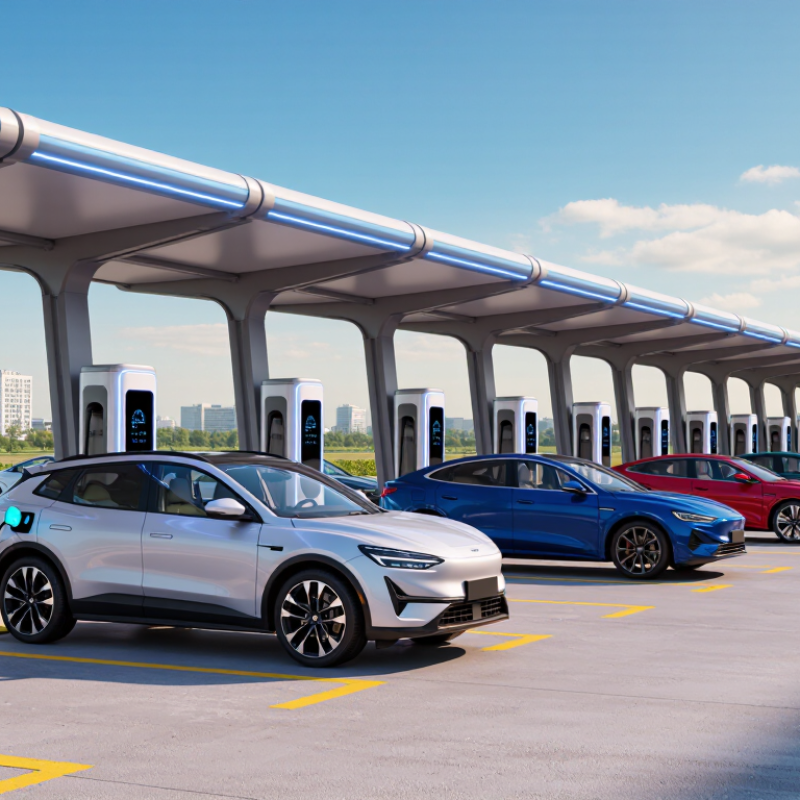
Top Ways to Reduce Electric Vehicle Charging Time?
EV charging speed depends on more than the charger’s advertised power. The vehicle’s battery system may accept only a limited rate. A powerful charger cannot bypass that limit. Battery temperature also matters. Cold cells usually charge more slowly, while excessive heat can trigger automatic power reductions.
The battery’s charge level affects speed as well. Charging is often fastest below about 80 percent, then gradually slows to protect the cells. I have found that arriving with a low battery can save time, but planning too closely creates stress. Weather, cable condition, grid demand, and shared charging stations may also change the actual result. Published charging figures are useful, yet real sessions rarely match perfect laboratory conditions.
Tips: Precondition the battery before a fast-charging session when the vehicle allows it. Choose a charger that matches the vehicle’s maximum input. Keep the battery above very low levels when possible. Remove unnecessary charging limits in the vehicle settings, but check the owner’s guidance first. A cooler, shaded location may help during hot weather. Charging overnight at home can be slower, but it often suits daily driving and reduces waiting. Keep the cable and connector clean. Small details matter.
Choosing the right charger starts with your vehicle’s maximum charging rate, not the charger’s headline number. A 150 kW station cannot make a vehicle designed for 50 kW accept 150 kW. The car will limit the electricity automatically. The U.S. Department of Energy’s Alternative Fuels Data Center places typical DC fast-charging power between 50 and 350 kW. However, actual speed depends on the vehicle, battery temperature, and state of charge.
Check the owner’s manual for three figures: maximum AC input, maximum DC input, and supported connector type. A vehicle limited to 7.2 kW AC gains little from a higher-rated AC unit. A 32-amp, 7.7 kW charger may already match its onboard charger closely. For longer trips, choose a DC charger near the vehicle’s peak rate. Charging usually slows after the battery reaches roughly 80 percent, so arriving near 10 percent can save time. Keep the cable prepared and avoid using an unsuitable adapter.
The International Energy Agency reported more than four million public charging points worldwide at the end of 2023, with total numbers rising over 40 percent in one year. More stations do not always mean faster charging. Cold weather can reduce charging power sharply, and shared sites may divide available output between vehicles. I have seen drivers select the largest number on the screen and still wait longer than expected. The better habit is matching charger power to the vehicle’s real charging curve, then checking conditions before plugging in.
A fast charger cannot overcome a battery that is too cold or too hot. Before a trip, check your vehicle’s charging guidance and use its battery-preconditioning setting when available. Some vehicles warm or cool the battery automatically when a fast-charging stop is set in the navigation system. If the car is plugged in at home, preconditioning may draw power from the outlet rather than the battery. Small detail, real difference.
Tips: In cold weather, allow extra time before departure. Set the fast charger as your destination, not just a nearby address. If the battery is hot after a long drive, a short pause may help, but follow the vehicle’s temperature warnings. Do not use improvised heating methods.
Arrive with a charge level suited to your route and charging plan. Many vehicles charge fastest at lower and moderate battery levels, then slow down as the battery fills, especially near the top. The exact point varies by model, temperature, and charger, so check the owner’s manual rather than relying on a fixed percentage. I have found it easy to focus on the charger’s advertised power and overlook the battery’s condition. That assumption is worth questioning. A warm, prepared battery can matter more than a short queue.
| Preparation or Charging Strategy | What to Do | How It Can Help | Important Consideration |
|---|---|---|---|
| Precondition the battery | Use the vehicle’s battery-preconditioning setting before a planned fast-charging stop, if available. | A battery closer to its preferred operating temperature can accept power more readily than one that is very cold or hot. | Preconditioning behavior and the target temperature vary by vehicle. Check the owner’s manual. |
| Navigate to a fast charger | When supported, set the charging station as the destination in the vehicle’s navigation system. | Some vehicles use the route information to prepare the battery before arrival. | Simply driving to a charger may not activate preconditioning; the feature and activation method are vehicle-specific. |
| Precondition while plugged in | If the vehicle allows it, warm or cool the battery while connected to a charger before departure. | Using external power for preparation can preserve more of the battery’s stored energy for driving. | Whether this is possible depends on the vehicle, charger, temperature, and settings. |
| Choose a compatible charging station | Check that the station’s connector and power level are supported by the vehicle. | A compatible high-power charger can provide faster charging when the battery and vehicle can accept that power. | The vehicle’s maximum charging rate, battery temperature, and station conditions can limit actual power. |
| Arrive with a lower state of charge when practical | Plan charging stops before the battery is nearly full, while keeping an appropriate driving reserve. | Many EVs reduce charging power as the battery approaches a high state of charge, so adding energy at a lower state of charge can take less time. | Charging curves differ. Follow the vehicle’s guidance and plan around route, weather, and charger availability. |
| Avoid unnecessary high-state-of-charge charging | For a brief stop, charge only to the level needed for the next leg when conditions allow. | Stopping before charging power tapers substantially can reduce time spent at the charger. | Charge farther when required by the route, limited charging access, or other travel needs. |
| Allow for temperature effects | In very cold or hot conditions, allow the vehicle time to manage battery temperature before a fast-charging session. | Temperature management can help bring the battery toward conditions suitable for charging. | Extreme temperatures can affect charging speed; the vehicle may limit power to protect the battery. |
Reducing charging time starts before plugging in. The U.S. Department of Energy’s Alternative Fuels Data Center says DC fast charging can typically bring an electric vehicle to 80% in about 20 minutes to one hour. Actual times vary with the vehicle, charger, battery temperature, and starting charge level. Check the vehicle’s maximum charging rate, too; a high-power station cannot make every car charge faster. Small detail, big difference.
For a quicker stop, plan to arrive with a lower battery level when practical, then leave around 80%. Charging often slows as the battery fills, so the final stretch can take disproportionately longer. A 2024 International Energy Agency report also notes that public charging infrastructure is expanding, but availability and capacity still differ by location. Use route-planning tools to find compatible fast chargers and check live availability before detouring. In cold weather, precondition the battery while driving, if the vehicle supports it; a cold pack may accept power more slowly. And don’t assume every stop will be seamless. Charger status data can lag, so keep a backup location in mind.
Fast charging is useful, but battery health largely determines how well it works over time. The 2024 EV Battery Health Study reviewed more than 22,000 vehicles and reported average battery degradation near 1.8% per year. Heat, frequent high-power charging, and long periods at full charge can accelerate that decline. A healthier battery usually accepts energy more consistently.
Keep daily charging near 20% to 80% when practical. This is not a strict law. Long trips may require 100%. Charge fully before departure, rather than leaving the vehicle full overnight. The U.S. Department of Energy advises limiting exposure to extreme temperatures because heat speeds chemical aging, while cold reduces available power. Park in shade during hot weather. Use cabin preconditioning while connected to power. Small habits matter.
Fast charging works best when the battery is warm, but not overheated. Many drivers rush to a charger with a nearly empty, cold battery. That can reduce the initial charging rate. I have found the slower approach easier: charge after driving, then allow a short cooling period when conditions are severe. It is not perfect. Traffic and weather often defeat careful planning. Still, charging below 80% usually saves time because power commonly tapers near the upper range. The International Energy Agency reported that global public fast-charging capacity grew by about 50% in 2023, making shorter, healthier charging stops increasingly practical.
Fast charging is most efficient when the battery is within a moderate temperature range and the state of charge is below approximately 80%. Keeping the battery healthy, avoiding frequent extreme heat or cold, and using battery preconditioning can help preserve charging performance. Values shown are typical normalized patterns; actual results vary by vehicle, charger, temperature, and battery age.
The vehicle’s battery limits how much power it can accept. Temperature, charge level, charger output, cable condition, and shared station demand also matter.
The battery may not support the charger’s maximum output. Cold or overheated cells can reduce charging speed, too.
Charging is often quicker at low or moderate battery levels. Power commonly tapers as the battery approaches 80%, though the exact point varies.
Use battery preconditioning if available. Set the fast charger as your navigation destination, so the vehicle can prepare the battery during the drive.
No. A cold, nearly empty battery may charge slowly at first. Check the vehicle’s guidance and leave room for weather or traffic delays.
When practical, keep everyday charging around 20% to 80%. Avoid leaving the vehicle full for long periods, especially in hot conditions.
No. A full charge can make sense before a long trip. It is usually better to finish charging close to departure.
Choose a charger suited to the vehicle, keep the connector clean, and park in shade during hot weather. Small details help, but they do not guarantee a specific charging time.
Yes. Overnight charging can suit daily driving and reduce waiting. It may be slower, but that is often perfectly practical.
Reducing electric vehicle charging time starts with understanding the factors that affect charging speed, including the charger’s power output, the vehicle’s maximum charging capacity, battery temperature, and current state of charge. How to reduce charging time for electric vehicles depends largely on choosing a charger that matches the vehicle’s capabilities instead of using equipment that delivers more power than the vehicle can accept. Before charging, drivers can prepare the battery by avoiding extreme temperatures, planning charging stops when the battery is moderately depleted, and allowing the battery to reach a suitable operating temperature when possible.
Smart charging strategies can also minimize waiting, such as charging during shorter stops, selecting locations with suitable power levels, and avoiding unnecessary charging beyond the required range. Finally, regular maintenance and careful driving help preserve battery health and maintain consistent charging performance. Following these practices can make charging more efficient, reduce delays, and support a more convenient electric driving experience.

EnerNova Charger