Top 10 Reasons Why EV Battery Monitoring Is Important

Time:2026-11-14 Author:Charlotte
0%

Why monitoring EV batteries is important becomes clear when a vehicle faces a cold morning, a steep climb, or years of daily charging. The battery powers the journey, but its condition changes gradually and unevenly. The International Energy Agency’s Global EV Outlook 2024 reports nearly 14 million electric car sales worldwide in 2023, about 18% of all car sales. That growing fleet makes reliable battery information a practical need, not a technical extra.

Monitoring can reveal changes in usable capacity, temperature, voltage, and charging behavior. Geotab’s 2024 analysis of more than 11,000 electric vehicles found average battery degradation of 1.8% per year. Averages are useful, but they do not predict every vehicle. Conditions differ. A single dashboard reading can also miss a developing pattern. Battery scientist Dr. Shirley Meng’s research supports a cautious principle, paraphrased here: track battery behavior over time rather than relying on one snapshot.

Good monitoring helps drivers understand range changes, supports timely maintenance, and gives fleet managers better evidence for planning. It can also help identify unusual heat or cell imbalance before those signals become harder to interpret. Still, monitoring is not a promise of perfect prediction. Data can be incomplete, and alerts need context. This outline explores ten reasons that battery monitoring matters—from safety and performance to longevity, cost control, and confidence in everyday driving. The details count. And the limits do, too.
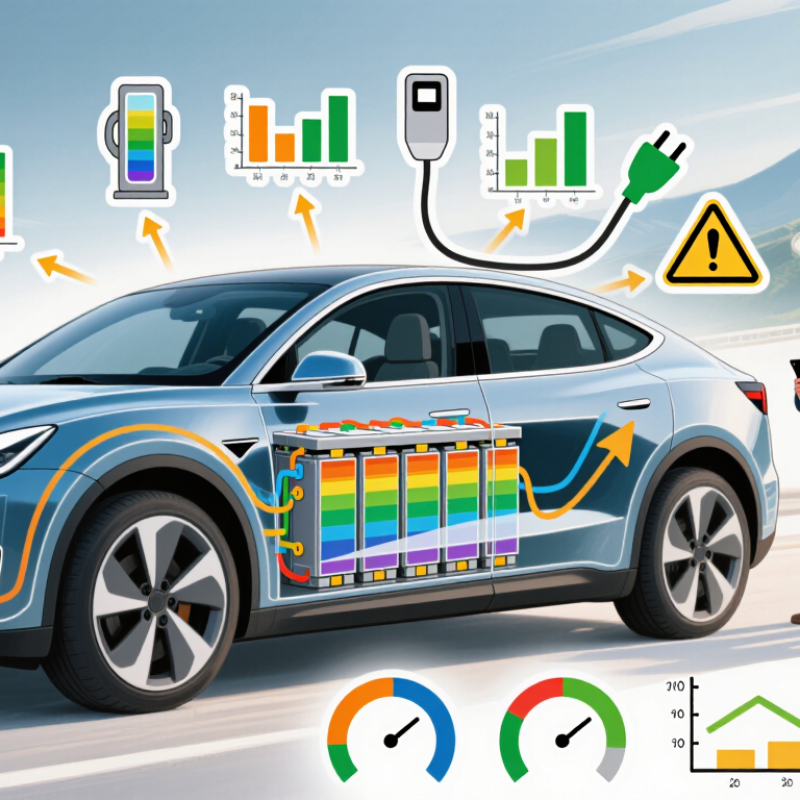
Top 10 Reasons Why EV Battery Monitoring Is Important

Battery-System Basics: BMS Tracks Voltage, Current, and Cell Temperature

An electric vehicle battery is not one uniform container. It is a group of cells, and each cell can behave a little differently as the pack charges, powers the motor, and ages. A battery management system (BMS) watches key signals: voltage, current, and cell temperature. Small changes matter. A single reading rarely tells the whole story, but patterns can reveal stress.

Voltage readings show how cells respond to charging and discharging. If one cell repeatedly sits far above or below its neighbors, the BMS can limit charging or power to reduce strain. Current measurement helps estimate how quickly energy enters or leaves the pack. It also helps the system compare real use with safe operating limits. These controls can protect usable range and reduce avoidable wear, though they cannot reverse aging.

Temperature deserves close attention. Cells warm under heavy acceleration, fast charging, or hot weather, and heat may not spread evenly across a pack. Sensors give the BMS clues to adjust cooling or restrict power when needed. Not every sensor catches every local hot spot; placement and calibration matter. The data is useful, not magical. Drivers may notice slower charging or reduced output when the pack needs protection, which can feel inconvenient but reflects a trade-off between performance and battery health.

Safety and Fault Detection: Monitoring Protects a Growing EV Market

An electric vehicle battery pack contains many cells working together under changing loads. Battery monitoring tracks voltage, current, and temperature across the pack. These readings can reveal unusual patterns before they become obvious to a driver. Cell voltage differences may point to imbalance, while a rapid temperature rise can signal a developing fault. Small changes matter. Sensors near modules can help identify where heat is building, rather than showing only a pack-wide average. During rapid charging or steep climbs, that detail is especially useful.

Early warnings give drivers and service teams time to respond with care. A system may flag an abnormal reading, limit charging, or recommend inspection, depending on its design. A driver might notice a warning after parking, when the vehicle is still warm. No system is perfect. Sensors can drift, connections can fail, and software may not interpret every unusual condition correctly. Monitoring is most useful when readings are checked against reliable operating limits and maintenance procedures. Clear records can help technicians compare a current warning with earlier temperature or voltage patterns. That evidence supports safer decisions, though it cannot replace a careful inspection.

Battery Health: Geotab Measured 1.8% Average Annual EV Battery Degradation

A 2024 fleet analysis of more than 10,000 electric vehicles found average battery degradation of 1.8% per year. That figure is useful, but it is not a promise for every car. At a steady rate, a battery might retain about 83% of its original capacity after ten years; real-world aging does not follow a perfect line. Heat, frequent rapid charging, and heavy daily use can change the result. A hot parking lot and repeated fast-charge stops may matter more than the odometer alone. Small differences add up.

Monitoring turns that average into a vehicle-specific picture. Fleet teams can track changes in usable range, charging speed, and state-of-health readings, then investigate unusual drops before they disrupt a workday. The U.S. Department of Energy’s Alternative Fuels Data Center notes that many EV battery warranties cover at least eight years or 100,000 miles, but warranty thresholds do not reveal day-to-day battery condition. A dashboard reading can also be imperfect; sensors and driving conditions affect estimates. Still, trends across months are more informative than one reading on a cold morning. Review the data alongside temperature, mileage, and charging habits. That takes discipline. It can also prevent a small, unexplained range loss from becoming a surprise route-planning problem.

Cost and Longevity: BloombergNEF Put 2024 Battery Packs at $115/kWh

A 2024 average battery-pack price of about $115 per kilowatt-hour puts replacement costs into sharper focus. That number matters. It is an industry-wide estimate, not a quote for every vehicle or repair. Pack chemistry, vehicle design, labor, and local supply can all change the final bill. Even a modest loss of usable capacity may affect driving range and resale value.

Battery monitoring helps owners and technicians spot changes before they become expensive surprises. Cell voltage differences, rising temperatures, and unusual charging patterns can point to developing issues. A dashboard reading is not a diagnosis, though. Service teams need reliable measurements and context, such as battery age and recent driving conditions. Small clues count.

Monitoring can also support longer battery life by revealing repeated heat exposure or charging habits that deserve attention. It cannot stop every fault, and a healthy reading today is no guarantee tomorrow. That uncertainty is easy to overlook. The $115 figure makes the stakes tangible, but careful monitoring is valuable even when no repair is needed: it helps distinguish normal aging from a change that merits inspection.

Top 10 Reasons Why EV Battery Monitoring Is Important — Cost and Longevity: 2024 Battery Packs at $115/kWh

No. Why Monitoring Matters What to Monitor Relevant Data or Fact Practical Benefit
1 Control battery-related costs Pack state of health, capacity, fault codes, and temperature history A 2024 published market benchmark put the average lithium-ion battery pack price at $115/kWh. At that average, a hypothetical 60 kWh pack equates to $6,900 before vehicle-level costs and other adjustments. Earlier detection of abnormal conditions can help avoid preventable repairs and unnecessary pack replacement.
2 Track capacity loss over time State of health (SoH), usable capacity, and charging history SoH estimates a battery’s condition relative to its condition when new; it is not the same as state of charge. Separates normal capacity change from an unusual decline that may need investigation.
3 Improve safety oversight Cell and pack temperatures, voltage differences, and isolation faults Lithium-ion battery systems use sensors and control systems to detect conditions outside their permitted operating limits; those limits vary by battery design and chemistry. Supports timely warnings and protective actions when abnormal readings occur.
4 Make driving-range estimates more useful State of charge, available energy, temperature, and recent energy use Available driving range depends on usable battery energy and vehicle energy consumption, which can change with speed, weather, terrain, and cabin heating or cooling. Helps provide better-informed range estimates and trip planning.
5 Manage charging more effectively Charge rate, battery temperature, state of charge, and charging interruptions Charging power is limited by the vehicle, charger, battery condition, and operating temperature; the maximum rate is not available in every charging session. Can help identify charging issues and guide charging within the vehicle’s recommended limits.
6 Identify cell imbalance Voltage spread between cells or modules during charging and operation A battery pack contains interconnected cells; differences between cell readings can affect how much of the pack’s capacity is usable. Helps technicians distinguish a pack-level concern from a localized cell or module issue.
7 Understand temperature-related performance Battery temperature, cooling-system operation, and temperature variation across the pack Battery performance and charging capability are temperature-dependent; vehicles may use thermal-management systems to heat or cool the pack. Helps explain changes in charging speed or available power in hot and cold conditions.
8 Support warranty and service decisions Dated diagnostic records, fault history, SoH estimates, and charging events Battery warranty duration, mileage limits, and capacity coverage vary by vehicle and jurisdiction; the applicable warranty terms should be checked directly. Provides useful evidence for troubleshooting and warranty assessments.
9 Reduce fleet downtime Recurring alerts, charging availability, energy use, and maintenance history Battery diagnostics can be combined with vehicle-use and charging records to identify recurring operational problems. Helps fleet operators plan inspections and charging around vehicle schedules.
10 Inform reuse and end-of-life decisions Remaining capacity, power capability, fault history, and pack condition A battery’s suitability for continued vehicle use, stationary storage, or recycling depends on its measured condition and applicable safety requirements. Creates a clearer evidence base for repair, reuse, repurposing, or recycling decisions.

Note: Battery thresholds, warranty coverage, and monitoring capabilities vary by vehicle design, battery chemistry, and jurisdiction. The 60 kWh example is a simple calculation using the stated average pack-price benchmark, not a quoted vehicle price.

Traceability: EU Battery Passports for EV Batteries Begin in 2027

Traceability: EU Battery Passports for EV Batteries Begin in 2027

Under the EU Battery Regulation, EV batteries placed on the market need an electronic passport from 18 February 2027. Each passport is linked to a unique identifier, typically accessed through a QR code. It is designed to hold structured information about materials, carbon footprint, recycled content, performance, and expected lifetime. Access to some details may be restricted.

That makes battery monitoring more than a dashboard feature. Cell voltage, temperature, charge cycles, and capacity loss can help show how a pack changes over time. A technician might compare a sudden temperature rise with earlier readings, then record an inspection or repair. These details can support maintenance, second-life assessments, and recycling decisions.

Yet a passport is only as trustworthy as the data behind it. Sensors drift. Repairs go undocumented. Small gaps matter. Regular calibration, clear data responsibilities, and secure updates will help keep records useful across service teams, fleet operators, and recyclers. A passport cannot make every battery transparent overnight; some information may be incomplete or difficult to verify. Monitoring can reveal those weaknesses earlier, though the process will still depend on careful record-keeping.

FAQS

What does the 2024 battery-pack price estimate mean for owners?

The average was about $115 per kilowatt-hour. It is not a repair quote. Vehicle design, chemistry, labor, and local supply can change the final cost.

What battery changes can monitoring reveal?

It can flag voltage differences between cells, rising temperatures, or unusual charging patterns. Small clues count.

Does a dashboard warning confirm that a battery needs repair?

No. A dashboard reading is not a diagnosis. Technicians need reliable measurements and context, including battery age and recent driving conditions.

Can monitoring help extend battery life?

It may reveal repeated heat exposure or charging habits worth reviewing. It cannot prevent every fault. One healthy reading proves little about tomorrow.

When do EU battery passports begin for electric vehicle batteries?

From 18 February 2027, batteries placed on the EU market need an electronic passport. Each passport links to a unique identifier, often reached through a QR code.

What information can a battery passport contain?

It is designed to hold details about materials, carbon footprint, recycled content, performance, and expected lifetime. Some information may have restricted access.

How can monitoring data support battery records?

Readings for temperature, voltage, charge cycles, and capacity loss can show changes over time. A technician might compare a temperature spike with earlier readings and record an inspection.

Can battery passports guarantee complete and accurate records?

No. Sensors can drift, repairs may go undocumented, and some details may be hard to verify. Clear responsibilities and regular calibration help, but gaps remain possible.

Conclusion

Why monitoring EV batteries is important becomes clear when we consider how much a battery affects an electric vehicle’s safety, performance, and lifespan. A battery management system tracks voltage, current, and cell temperature, helping identify unusual conditions before they develop into serious faults. Continuous monitoring can also support more reliable operation as the number of electric vehicles grows.

Battery data offers a way to assess health over time. One analysis found average annual battery degradation of about 1.8%, though actual results vary with use and conditions. Monitoring can help owners and operators understand changes in capacity, plan maintenance, and make informed decisions that may extend battery life and reduce costs. With battery packs averaging around $115 per kilowatt-hour in 2024, protecting their performance has practical financial value. From 2027, battery passports for electric vehicle batteries are also expected to improve traceability by recording key information about a battery’s history and condition.

Charlotte

Charlotte

Charlotte is a seasoned marketing professional with a deep understanding of the company's portfolio and a passion for elevating its presence in the market. With a keen eye for detail and a commitment to excellence, she ensures that our professional blog is regularly updated with insightful articles......