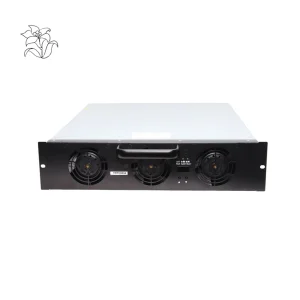
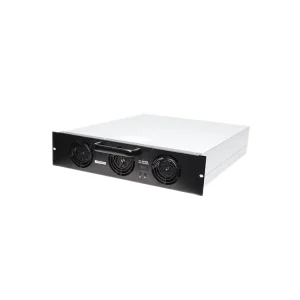
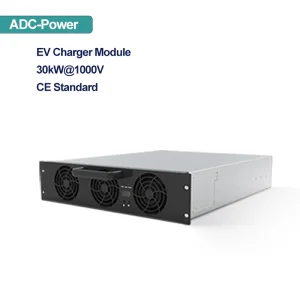
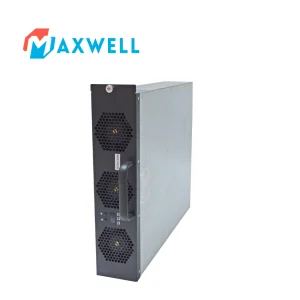
The global electric vehicle (EV) market is undergoing a seismic shift. As battery capacities increase, the demand for faster, more reliable charging solutions has moved from 7kW AC home chargers to high-power DC fast charging. At the heart of this transition lies the 30kW DC Charging Module—the "engine" of modern charging piles. Currently, the commercial and industrial sectors are witnessing an unprecedented surge in the deployment of 30kW modules due to their perfect balance between power density, thermal efficiency, and cost-effectiveness.
Globally, the market for DC charging modules is projected to grow at a CAGR of over 25% through 2030. In regions like Europe and North America, the focus is on building "Electric Highways," requiring modular 30kW units that can be stacked to create 120kW, 180kW, or even 360kW ultra-fast charging stations. As a leading manufacturer, we understand that the 30kW module is not just a component; it is the fundamental building block of the global energy transition.
Enterprises are shifting from standalone chargers to networked, modular systems. 30kW modules allow for easy scaling and maintenance, reducing downtime for CPOs (Charge Point Operators).
Beyond public stations, 30kW DC modules are being integrated into warehouse AGVs, electric forklifts, and commercial fleet depots where rapid turnaround is vital for operational ROI.
Compliance with CE, UL, and TUV is no longer optional. Our 9th-generation modules meet the most stringent global safety standards, ensuring seamless entry into international markets.

Modern 30kW modules utilize Silicon Carbide (SiC) MOSFETs, which significantly reduce switching losses compared to traditional IGBT technology. This leads to conversion efficiencies exceeding 96%, meaning less heat generation and lower cooling costs for the station operator.
International buyers—from utility companies to private charging networks—have specific requirements for DC power modules. We address these through advanced engineering and robust supply chain management.
We provide tailored solutions including custom communication protocols (CAN, RS485), specific dimensions for compact cabinets, and branded casing for global distributors.
Our modules are designed for harsh environments, featuring internal glue-filling for moisture and dust protection (IP20/IP54 system integration levels) and operating temps from -30°C to +75°C.
As a direct factory, we maintain a stable inventory of core components, ensuring lead times of 2-4 weeks even during peak demand, a critical advantage for large-scale infrastructure projects.

Integrating 3-6 modules of 30kW into a single cabinet creates a 90kW-180kW station, ideal for urban shopping malls and public parking lots where space is premium but speed is necessary.
Commercial vans and trucks require sustained high-power DC charging. Our 30kW modules offer the reliability needed for 24/7 operation in busy logistics centers.
By stacking multiple 30kW modules, stations can provide ultra-fast charging (350kW+) to reduce "range anxiety" for long-distance travelers, supporting the V2G (Vehicle-to-Grid) future.
The next decade will see the maturation of Smart Grid Integration. 30kW modules are now being designed with bi-directional capabilities, allowing EVs not just to take power, but to give it back during peak demand. This V2H (Vehicle to Home) and V2G capability will transform the EV from a consumer of energy into a mobile battery asset.
Furthermore, the trend towards AI-Driven Predictive Maintenance is gaining traction. Our modules incorporate smart sensors that monitor temperature, voltage ripples, and fan speed in real-time. This data is fed into cloud platforms to predict failures before they happen, shifting maintenance from "reactive" to "proactive."
As a leading manufacturer, EnerNova is investing heavily in Liquid-Cooling Technology for power modules. While air-cooling remains the standard for 30kW units due to cost, liquid-cooled variants are emerging for ultra-quiet and high-density environments. We remain at the forefront of these innovations, ensuring our partners always have access to the latest technological breakthroughs.
Environmental sustainability is also driving the use of Wide Bandgap Semiconductors. By using Gallium Nitride (GaN) and SiC, we are making modules smaller, lighter, and more efficient, reducing the overall carbon footprint of the manufacturing process and the charger's lifecycle.
 EnerNova Charger