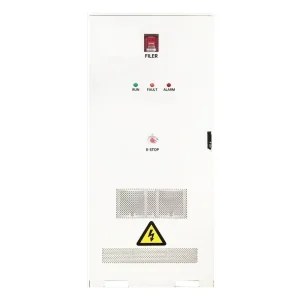
The global demand for Industrial Energy Storage Systems (IESS) is witnessing an unprecedented surge. As the world pivots toward renewable energy, the need for stable, high-capacity battery storage has become critical. Today, industrial players are no longer just consumers of electricity; they are becoming active participants in the energy market through Battery Energy Storage Systems (BESS).
Currently, North America, Europe, and Asia-Pacific lead the market. In Europe, the drive for energy independence and the "Green Deal" are pushing factories to adopt LFP (Lithium Iron Phosphate) storage. In the USA, tax incentives like the Inflation Reduction Act (IRA) have made utility-scale and industrial-behind-the-meter storage highly profitable. The market is expected to grow at a CAGR of over 25% through 2030.
Projected global market value for BESS by 2030, driven by industrial decarbonization.
In the cost of Lithium-ion battery packs over the last decade, making storage viable for SMEs.
Lithium Iron Phosphate (LFP) has become the gold standard for industrial applications due to its superior safety profile, longer cycle life, and lower cost compared to NMC batteries.
Modern BESS now integrate AI and Machine Learning for Peak Shaving and Load Leveling, predicting energy prices and optimizing discharge cycles automatically.
A growing focus on "Second-Life" batteries and recyclability is influencing how factories choose their suppliers, favoring those with sustainable end-of-life programs.
Vehicle-to-Grid technology is merging with industrial storage, allowing corporate EV fleets to act as mobile energy reserves for manufacturing facilities.
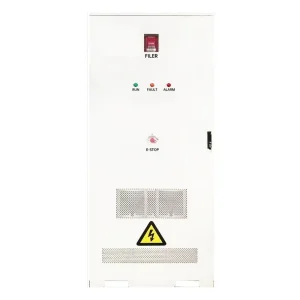
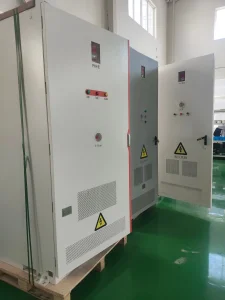
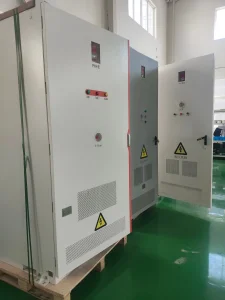
International buyers are increasingly looking for Turnkey Solutions. The complexity of grid-tied systems means that procurement teams are not just buying batteries; they are sourcing integrated systems that include PCS (Power Conversion Systems), BMS (Battery Management Systems), and fire suppression technology.
Utilizing Peak Arbitrage to store energy during low-tariff hours and discharge during peak production, reducing electricity bills by up to 30%.
Providing seamless Backup Power. Unlike traditional UPS, industrial BESS can provide sustained power for hours, ensuring zero data loss or patient risk.
Smoothing the output of wind and solar farms. Our Grid-Tied Battery Storage prevents grid instability caused by weather fluctuations.
China is currently the world's largest producer of lithium batteries, accounting for over 70% of the global supply chain. Choosing a leading Chinese supplier like Hangzhou EnerNova offers significant strategic advantages:
When evaluating the top 10 factories, we look at:
Hangzhou EnerNova Charger Co., Ltd. is a leading innovator in the field of electric vehicle charging and smart energy solutions. Specializing in both AC and DC EV charging technologies, the company provides a comprehensive range of products and services designed to meet the diverse needs of residential, commercial, and fleet customers.
EnerNova’s portfolio includes home EV chargers, fast DC charging stations, intelligent charging power management systems, and advanced energy storage solutions. By integrating cutting-edge hardware with smart software, the company ensures optimized charging efficiency, real-time monitoring, and reliable energy management for all applications.
Committed to sustainability and the development of green transportation, Hangzhou EnerNova emphasizes seamless integration of renewable energy sources with its charging and storage systems. Its solutions support vehicle-to-grid (V2G) applications, load balancing, and intelligent energy optimization, helping customers reduce operational costs while enhancing grid stability.

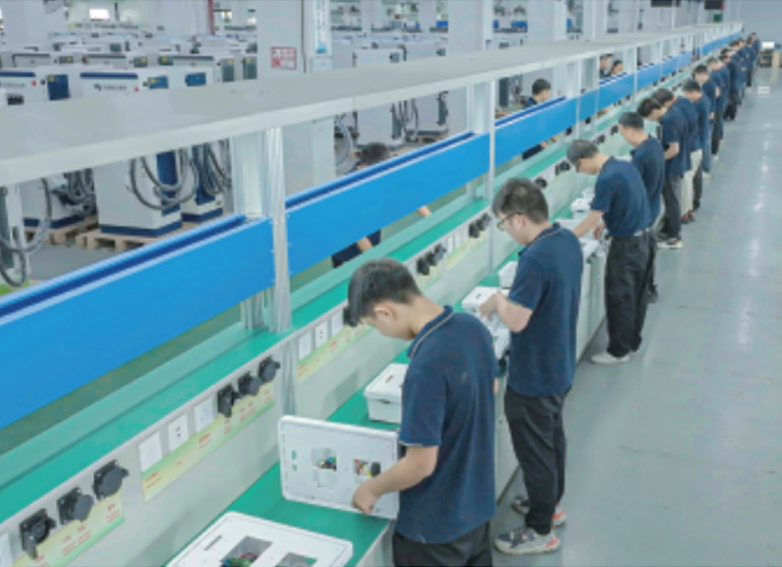
With rigorous quality standards, continuous R&D investment, and a customer-centric approach, EnerNova has established itself as a trusted partner in the EV and smart energy industry. The company’s innovative technologies empower users to adopt cleaner, smarter, and more efficient energy solutions, paving the way for the future of intelligent mobility.
 EnerNova Charger