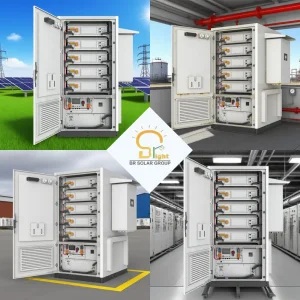
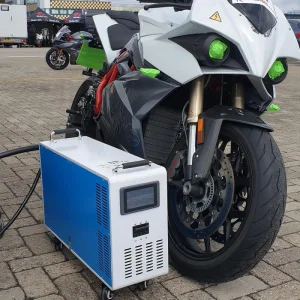
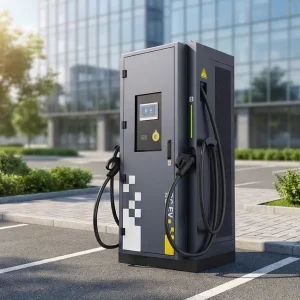
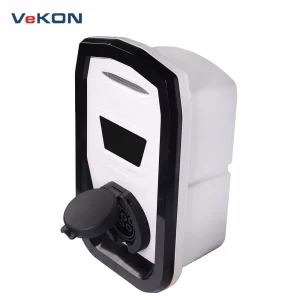
Explore our high-performance power conversion modules, grid-tied battery containers, and EV fast-charging integration systems engineered for global utilities and commercial enterprises.
As the global energy paradigm rapidly shifts from traditional fossil-fuel combustion to intermittent renewable sources like solar photovoltaics (PV) and wind energy, electrical grids worldwide face unprecedented instability, peak-demand surges, and frequency deviation challenges. Grid Energy Storage Solutions (BESS) have emerged as the foundational pillar of modern electrical infrastructure, providing critical services such as frequency regulation, peak shaving, spinning reserve, ramp rate control, and microgrid stabilization.
China has established itself as the undisputed global powerhouse in manufacturing, designing, and deploying utility-scale and commercial grid energy storage systems. Backed by unparalleled vertical integration, state-of-the-art gigafactory automation, and relentless battery chemistry innovation (such as long-cycle Lithium Iron Phosphate LFP and emerging Sodium-Ion systems), Chinese suppliers provide international grid operators, Independent Power Producers (IPPs), and EPC contractors with superior volumetric energy density, enhanced safety standards, and unmatched Levelized Cost of Storage (LCOS).
Hangzhou EnerNova Charger Co., Ltd. is a leading innovator in the field of electric vehicle charging and smart energy solutions. Specializing in both AC and DC EV charging technologies, the company provides a comprehensive range of products and services designed to meet the diverse needs of residential, commercial, and fleet customers.
EnerNova’s portfolio includes home EV chargers, fast DC charging stations, intelligent charging power management systems, and advanced energy storage solutions. By integrating cutting-edge hardware with smart software, the company ensures optimized charging efficiency, real-time monitoring, and reliable energy management for all applications.

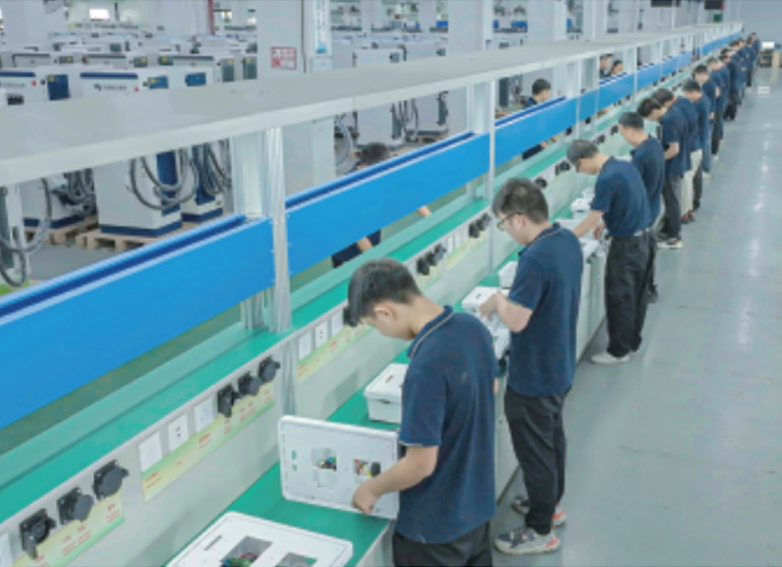
Committed to sustainability and the development of green transportation, Hangzhou EnerNova emphasizes seamless integration of renewable energy sources with its charging and storage systems. Its solutions support vehicle-to-grid (V2G) applications, load balancing, and intelligent energy optimization, helping customers reduce operational costs while enhancing grid stability.
With rigorous quality standards, continuous R&D investment, and a customer-centric approach, EnerNova has established itself as a trusted partner in the EV and smart energy industry. The company’s innovative technologies empower users to adopt cleaner, smarter, and more efficient energy solutions, paving the way for the future of intelligent mobility.
Understanding why top international utilities, EPC developers, and commercial entities source Grid Energy Storage Solutions from Chinese tier-1 OEMs requires examining the end-to-end industrial ecosystem. China's competitive advantage extends far beyond labor arbitrage; it is driven by deep technological vertical integration, industrial cluster synergies, and massive capital reinvestment.
From lithium refining, precursor synthesis, cathode/anode formulation, to BMS algorithms, Power Conversion Systems (PCS), and liquid-cooled containerized system assembly, Chinese suppliers control over 75% of the global value chain. This mitigates single-point component shortages and shortens production lead times by 40-60% compared to Western counterparts.
China’s BESS manufacturing sector utilizes highly automated 4.0 Smart Gigafactories. Cell consistency is controlled at the micro-ampere level with automated laser welding, optical inspection (AOI), and continuous thermal runaway screening. Modular 20ft and 40ft container designs (e.g., 2.5MWh to 5MWh per unit) allow rapid drop-in installation on global sites.
Leading manufacturers perform destructive testing protocols including nail penetration, salt spray corrosion test for coastal deployments, seismic simulation (IEEE 693), and full-scale thermal runaway propagation testing adhering strictly to UL 9540A and IEC 62619 standards.
| Assessment Metric | Tier-1 Chinese BESS Manufacturers | North American / EU Assemblers | Emerging Asian Markets |
|---|---|---|---|
| Cell Chemistry Dominance | LiFePO4 (LFP), Sodium-Ion, Semi-Solid State | NMC / LFP (Import-dependent) | LFP / Lead-Acid Legacy |
| Average LCOE / Storage Cost | Lowest ($0.04 - $0.07 / kWh cycle) | Higher ($0.09 - $0.14 / kWh cycle) | Moderate ($0.08 - $0.11 / kWh cycle) |
| Order Lead Time (100MWh+) | 12 - 16 Weeks | 28 - 45 Weeks | 20 - 30 Weeks |
| BMS & PCS Integration | Native High-Voltage DC 1500V Systems | Third-party Multi-vendor Integration | Legacy 1000V Architectures |
Modern grid energy storage is not merely a box of batteries; it is a complex, high-voltage electro-thermal and digital ecosystem operating at the intersection of electrical engineering and software algorithms. Top Chinese suppliers lead the market in several crucial engineering innovations:
Transitioning from traditional 1000V DC topologies to 1500V architecture increases system energy density by over 30%, lowers cabling thermal losses, reduces auxiliary power consumption, and minimizes footprint requirements. Higher DC bus voltage allows larger Power Conversion Systems (PCS) to operate at peak efficiency exceeding 99%.
Advanced liquid-cooling systems maintain temperature gradients across thousands of cells within a tight target of ≤ 2.5°C. By eliminating local hot spots, liquid cooling extends battery cycle life by up to 20%, lowers internal parasitic fan energy losses by 40%, and prevents cell degradation acceleration under heavy thermal stress.
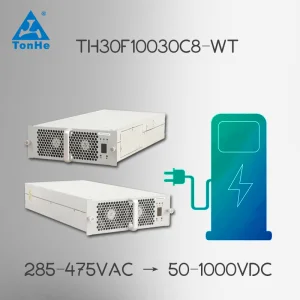
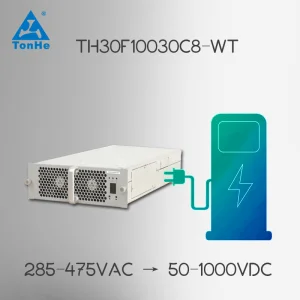
Utilizing high-power, high-voltage modules such as the Tonhe 8th Gen 30kW 1000V High Voltage Power Module, energy storage equipment can scale dynamically. Rack-mounted hot-swappable module topologies ensure N+1 redundancy: if a single converter module experiences a fault, the rest of the station continues operating uninterrupted.
Modern Battery Management Systems (BMS) use cloud-connected machine learning models to build digital twins of individual battery cells. By evaluating internal impedance variations, electrochemical impedance spectroscopy (EIS), and real-time gas monitoring, the system predicts thermal anomalies up to 72 hours before failure occurs.
Grid energy storage solutions must adapt to diverse geographical environments, regional utility grid codes, and commercial regulatory structures. Chinese turnkey manufacturers export custom-engineered solutions across five key localized scenarios:
Large-scale solar PV farms in desert regions (e.g., Middle East, Australia, Western US) experience sharp power output drops when clouds pass over. Containerized 5MWh BESS units connected to substation high-voltage transformers supply fast frequency response (FFR) within milliseconds, stabilizing grid frequency (50Hz / 60Hz) and preventing sub-synchronous resonance.
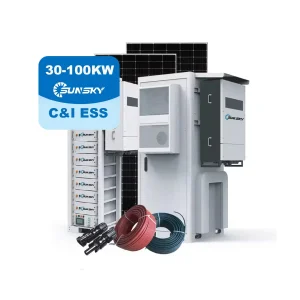
Manufacturing facilities, textile plants, and cold storage warehouses in regions with steep Time-of-Use (TOU) tariffs (such as California or Western Europe) deploy 100kWh to 1MWh liquid-cooled cabinets (e.g., ISO Approved Home/C&I 100kWh-1MWh BESS). The system charges during off-peak night hours and discharges during peak daytime pricing, significantly cutting demand charges.
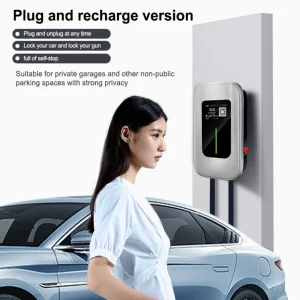
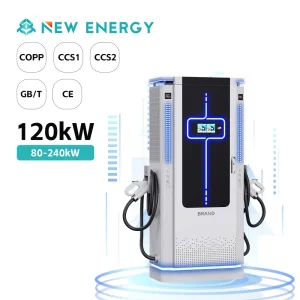
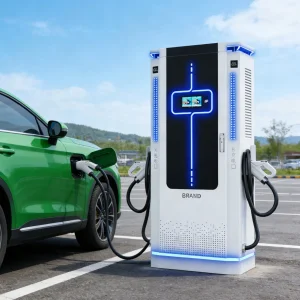
Deploying ultra-fast DC chargers (such as 120kW-240kW CCS2 stations) frequently overloads local distribution transformers. By integrating local BESS buffering with high-efficiency power modules, charging hub operators buffer power from the grid gradually and release high current spikes to vehicles without upgrading local grid transformers.
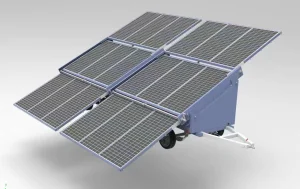
In island communities, remote mining operations, and off-grid agricultural zones, diesel generator power is extremely expensive and carbon-intensive. Hybrid solar systems paired with 50kW-500kW off-grid storage units establish autonomous microgrids with black-start capabilities, slashing diesel fuel reliance by over 70%.
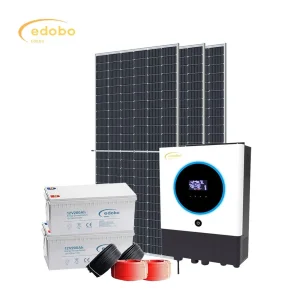
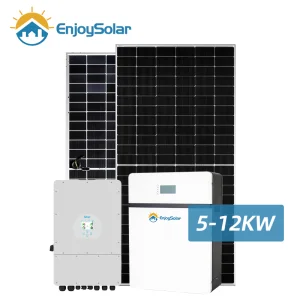
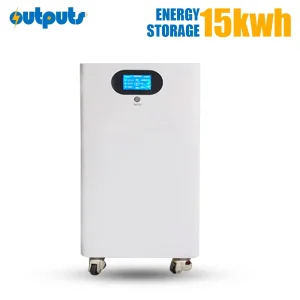
Homeowners facing grid blackouts or net-metering tariff reductions install 5kW to 15kW residential hybrid inverters paired with 15kWh wall- or floor-standing LiFePO4 battery banks (such as 51.2V 300Ah LFP systems) to achieve continuous energy self-sufficiency.
The grid energy storage industry is on the verge of massive technical breakthroughs. As global capital flows into long-duration energy storage (LDES) and decentralized smart grids, the technological roadmap for the next decade centers around key vectors:
While LiFePO4 remains the mainstream workhorse for short-to-medium duration storage, Sodium-Ion chemistry is rapidly emerging for grid application. Offering exceptional cold-temperature operating performance (-40°C to +60°C), thermal stability, zero risk of lithium supply constraints, and lower bill-of-materials costs, Na-Ion will capture significant market share in stationary utility storage by 2028.
Replacing flammable liquid electrolytes with solid polymer or ceramic electrolyte matrices completely eliminates risk of thermal runaway fires. Semi-solid cell chemistries are already undergoing utility scale pilot trials, promising energy densities over 350 Wh/kg and cycle counts exceeding 10,000 deep cycles.
Future grids will rely on distributed Virtual Power Plants (VPPs) aggregating thousands of residential batteries, commercial storage units, and bidirectional EV fast chargers (Vehicle-to-Grid V2G). Software algorithms dynamically trade electricity on wholesale spot markets, delivering automated demand-response revenues directly to asset owners.
Navigating localized regulatory approval processes is the single most important factor in bringing grid-connected energy storage projects online without costly delays. Premium Chinese manufacturers partner with global testing agencies to provide complete certification suites tailored to destination markets.
Top-tier suppliers offer comprehensive localized engineering support packages:
High-grade Tier-1 LiFePO4 cells manufactured in China typically deliver 6,000 to 10,000 complete charge/discharge cycles at 80% Depth of Discharge (DoD) under standard thermal management (25°C). Translating to calendar life, a well-maintained liquid-cooled BESS operates reliably for 15 to 20 years before requiring augmentation.
Liquid cooling provides direct, uniform thermal conduction to battery cells, maintaining maximum temperature variances under 2.5°C across the system. In contrast, air cooling often yields temperature variances exceeding 5-8°C, leading to uneven cell aging, higher parasitic auxiliary energy draw, and shorter system longevity. Liquid cooling also reduces overall enclosure footprint by up to 35%.
In "Solar-Storage-Charging" (PV-ESS-EV) microgrids, energy storage units act as a buffer. High-power DC fast charging causes massive, momentary power demand spikes that can overload local power transformers. The local battery storage system supplies high current instantly during active charging sessions, while charging itself slowly from solar panels or off-peak utility power during low-demand periods.
For North America, projects strictly require UL 9540 (system level standard), UL 1973 (battery cells/modules), and UL 9540A thermal runaway propagation test reports to secure local fire department (AHJ) approval. For Europe, essential certifications include CE compliance, IEC 62619 for industrial cell safety, IEC 62477 for inverter safety, and regional grid code grid-tied certifications such as VDE-AR-N 4105 or EN 50549.
Standard modular containerized BESS units (e.g., 1MWh to 5MWh standard containers) generally carry a lead time of 8 to 12 weeks from contract signing and engineering design freeze to factory acceptance testing (FAT). Fully customized non-standard system integrations or specialized high-voltage PCS configurations range between 14 to 18 weeks.
Browse additional energy management hardware, scalable LiFePO4 battery banks, and portable charging equipment available for worldwide export.
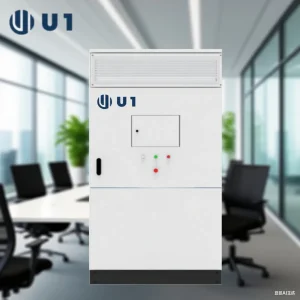
 EnerNova Charger